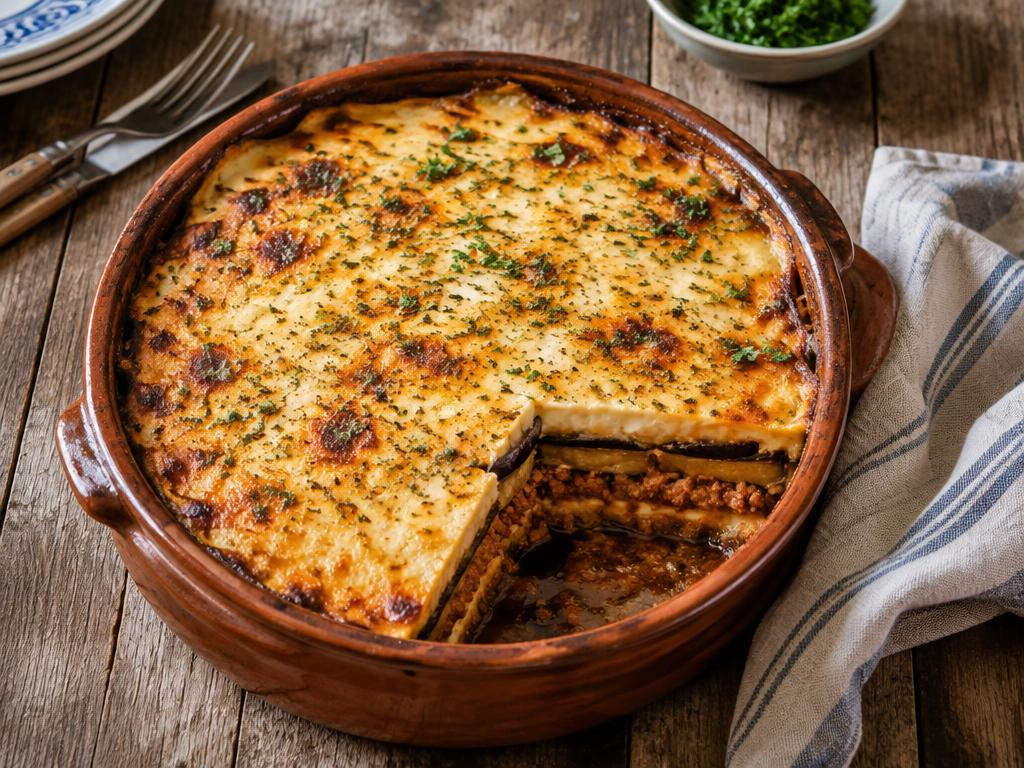
Moussaka
Μουσακάς · moo-sah-KAHS
Layers of eggplant, spiced minced meat and a golden béchamel top, baked until it bubbles. The classic Greek comfort bake.
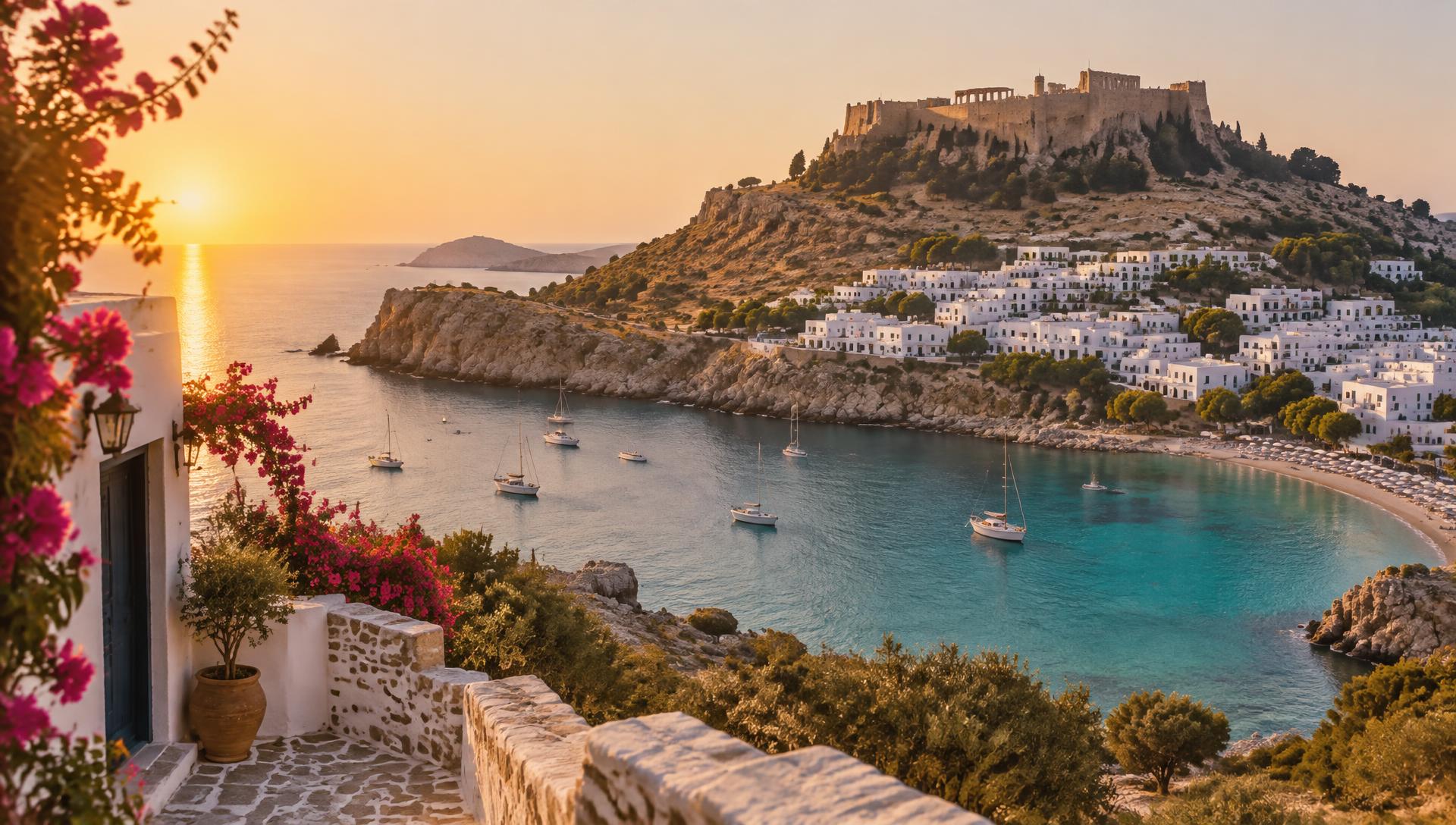
Yanni & Genesis · A little closer to Greece
The island’s stories. The words you’ll use. The music that brings everyone to their feet.
On the dance floor
From a soulful solo to a circle full of friends — these are some Greek dances you may see at our celebrations. The final songs and dance lineup are still to come, but you can get a feel for the traditions now.
From our own dance floor
A little clip of Genesis and Katerina Greek dancing — this is the energy we're bringing to Rhodes. No lessons required, just join in.
That's Yanni dancing zeibekiko at our engagement — an expressive solo, with every step responding to the music.
A personal moment · Solo · 9/8
Ζεϊμπέκικο
Rooted in the traditions of Asia Minor and closely associated with Greek rebetiko music, zeibekiko is an expressive, improvised solo dance. It isn’t a routine everyone copies: the dancer responds to the song, with grounded steps, turns and pauses.
When you’re there: Give the dancer space. Friends may crouch nearby and clap, but don’t jump into their solo. It is danced by people of all genders today.
Greek dancing is about being together, not putting on a perfect performance. Clap, enjoy the music, and join the group when invited. “Opa!” (ώπα · OH-pah) is a familiar shout of celebration. Plate smashing isn’t something to assume or copy — leave any special traditions to the hosts and venue.
The island behind the holiday
Ancient Rhodes honored Helios, the sun god. Around 280 BCE, the Rhodians completed a huge bronze statue of him: the Colossus of Rhodes, one of the Seven Wonders of the Ancient World. An earthquake toppled it in 226 BCE.
That famous picture of a giant straddling the harbor? A later imagining, not established history. Its exact location and appearance remain uncertain.
The medieval city grew under the Knights of St John, who held Rhodes from 1309 to 1522. Ottoman rule followed; Italian rule began in 1912. Rhodes and the other Dodecanese islands formally became part of Greece in 1948.
You can see these layers in the fortified Old Town, mosques, and Italian-era waterfront buildings. The medieval city is a UNESCO World Heritage Site. Rhodes also has a centuries-old Jewish heritage, remembered at Kahal Shalom Synagogue and the Jewish Museum.
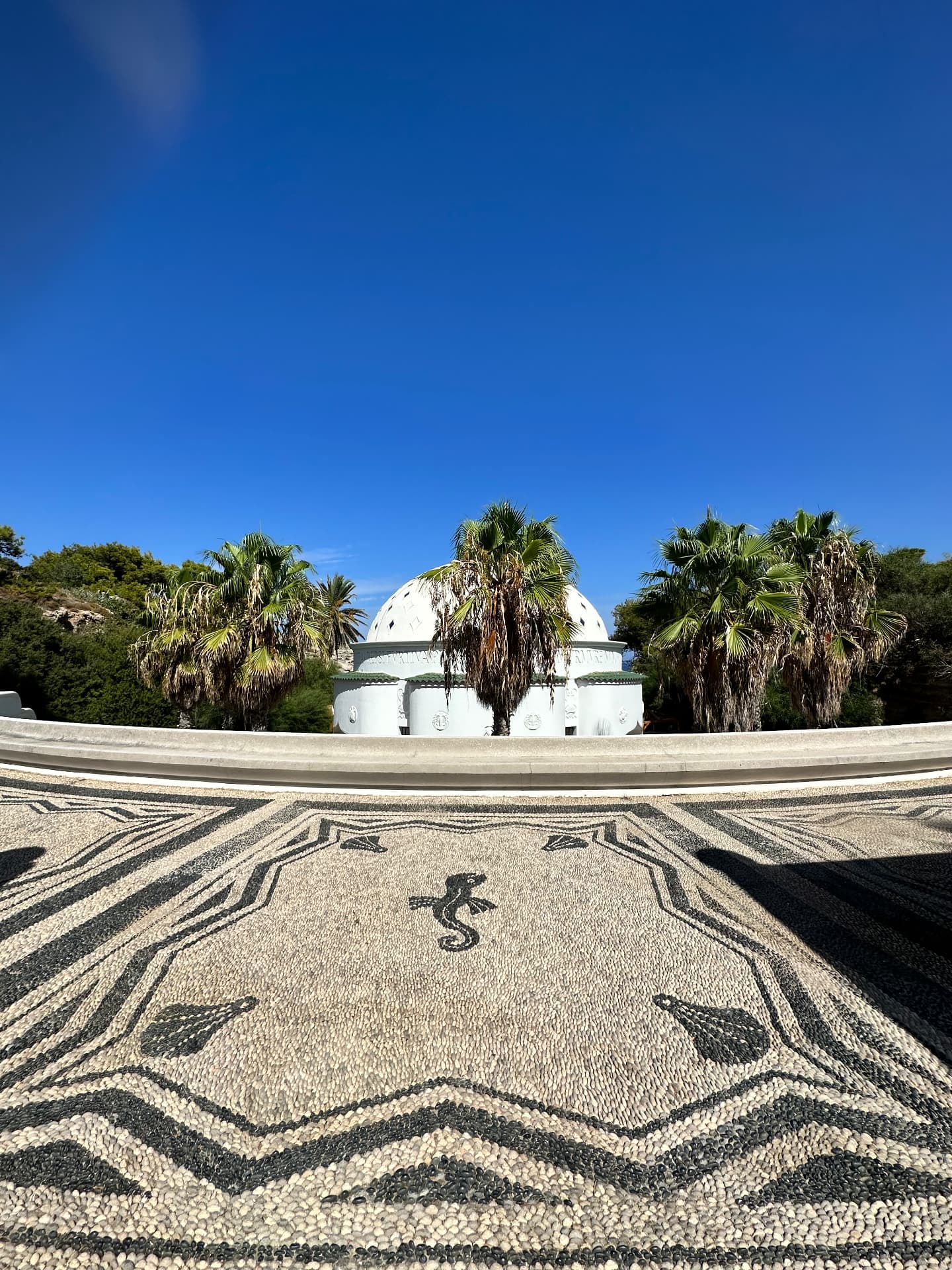
Look for the bronze stag and doe on the columns at Mandraki harbor. Deer are an emblem of Rhodes, and the island is home to a distinctive population of fallow deer, known locally as “platoni” (πλατώνι). Their arrival on Rhodes is debated — they are not a species found only on this island. If you spot wild deer inland, enjoy them from a distance and don’t feed them.
One island, two moods
Summer winds often reach the west and northwest coast more directly. Around Ixia and Ialyssos, expect breezier afternoons and water popular with windsurfers and kite surfers.
The east coast is generally more sheltered from those prevailing winds. Bays such as Anthony Quinn and Saint Paul’s often offer calmer swimming — though no beach is guaranteed flat water.

The sandbar at Prasonisi separates two stretches of sea and can change with the season. Wind direction and local conditions matter more than a simple east/west rule. Check beach flags and local advice; keep swimming clear of kite-surfing areas.
A little Greek goes a long way
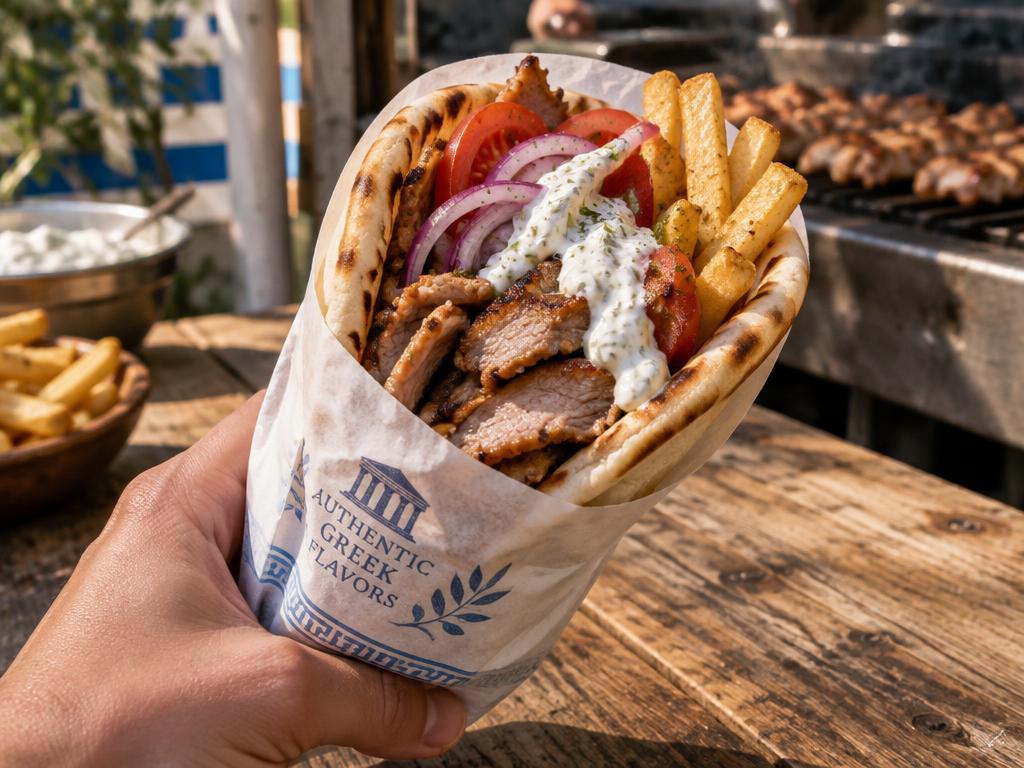
Slices of meat shaved from a rotating vertical spit. Say “YEE-ros” in Greek. For our pork gyro pick, head to Bahar.
One pita with pork gyro, please.
Μια πίτα με γύρο χοιρινό, παρακαλώ.
mee-ah PEE-tah meh YEE-roh hee-ree-NOH, pah-rah-kah-LOH
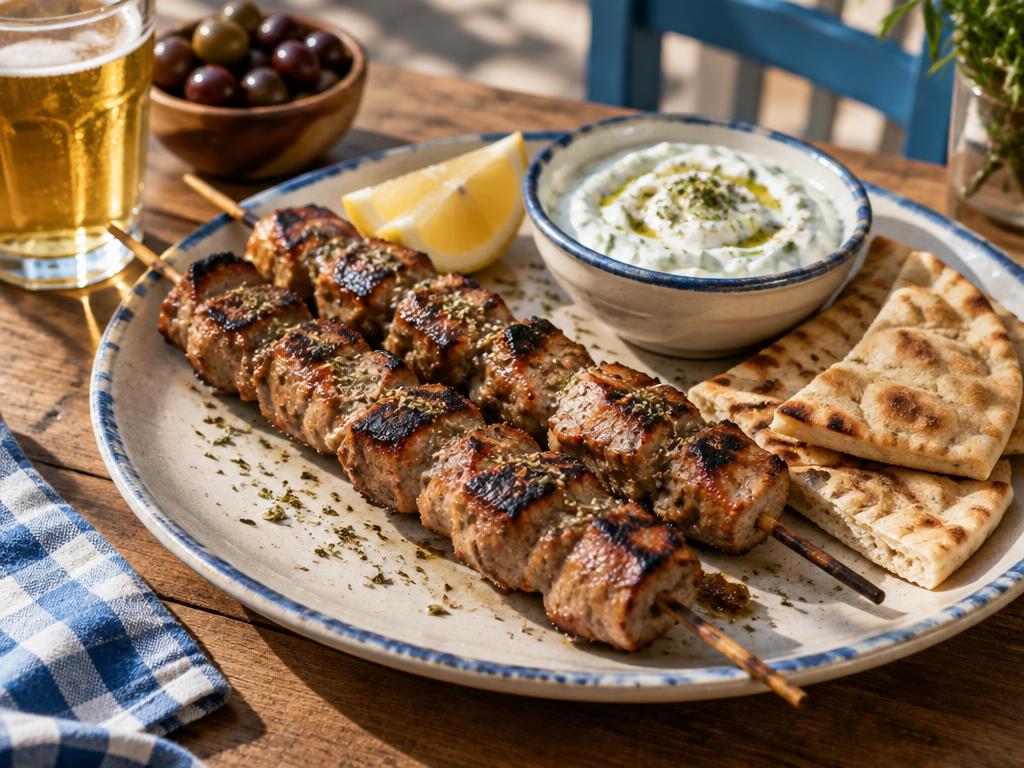
Small pieces of meat grilled on a skewer, not shaved from a spit. “Stin pita” means “in the pita” — ask for that if you want a wrap rather than just a skewer. Kellides is our pork souvlaki pick.
One pork souvlaki in a pita, please.
Ένα χοιρινό σουβλάκι στην πίτα, παρακαλώ.
EH-nah hee-ree-NOH soo-VLAH-kee steen PEE-tah, pah-rah-kah-LOH
Make it yours: “Ap’ ola” (απ’ όλα · ahp OH-lah) means with everything the shop normally includes. “Horis kremmydi” (χωρίς κρεμμύδι · hoh-REES kreh-MEE-thee) means without onion; “horis tzatziki” means without tzatziki. Fillings vary by shop — ask about ingredients and allergies directly.
Chicken instead? “Kotopoulo” (κοτόπουλο · koh-TOH-poo-loh). “Hoirino” (χοιρινό · hee-ree-NOH) means pork.
Around the taverna table
A taverna meal doesn’t have to mean a separate starter and main for each person. Many Greeks order a salad alongside the meal, then put a few dishes in the middle for everyone to share. Take your time, try a little of everything, and order more if you’re still hungry.
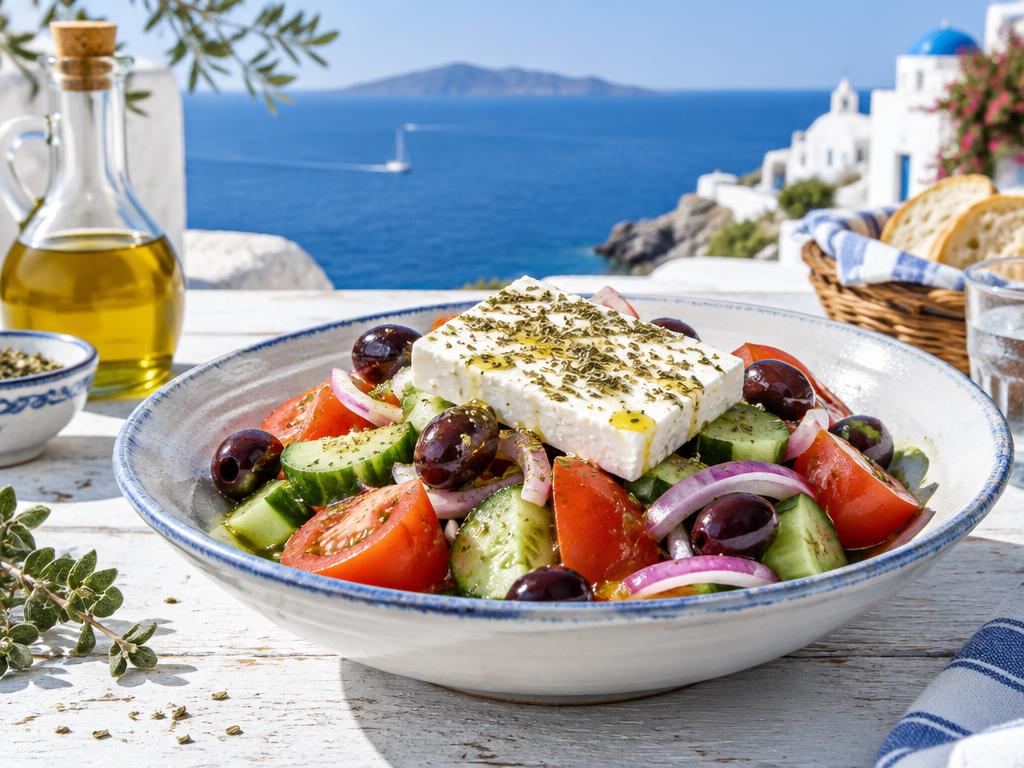
The Greek village salad — usually tomatoes, cucumber, onion, olives, feta, olive oil and oregano, traditionally without lettuce. It’s a lovely dish for the middle of the table. Ingredients can vary, so check if you have allergies or dietary needs.
One Greek salad, please.
Μια χωριάτικη, παρακαλώ.
mee-ah hoh-ree-AH-tee-kee, pah-rah-kah-LOH
Small dishes to share — a little like tapas, but their own Greek tradition. Look for tzatziki, fava (a smooth yellow split-pea purée), dolmades (stuffed vine leaves), grilled vegetables, cheese dishes, and seafood or meat plates. Choose a mix that suits your table.
We’d like some small plates to share.
Θα θέλαμε μεζέδες για τη μέση.
thah THEH-lah-meh meh-ZEH-thes yah tee MEH-see
Our approach: Start with a horiatiki, a dip and a few mezedes, then add a grilled dish or a house special to share. Ask what’s fresh or cooked today — especially at family-run tavernas.
What do you recommend?
Τι προτείνετε;
tee proh-TEE-neh-teh
Check whether fish is priced by weight and ask about portion sizes before ordering. Tell the staff about allergies directly; a dish’s name alone doesn’t tell you every ingredient.
English-friendly pronunciations below are approximate; capital letters mark the stressed syllable.
The big things to try
The dishes we dream about between trips. Put a few in the middle of the table, share everything, and don't skip the cheese courses.
Μουσακάς · moo-sah-KAHS
Layers of eggplant, spiced minced meat and a golden béchamel top, baked until it bubbles. The classic Greek comfort bake.
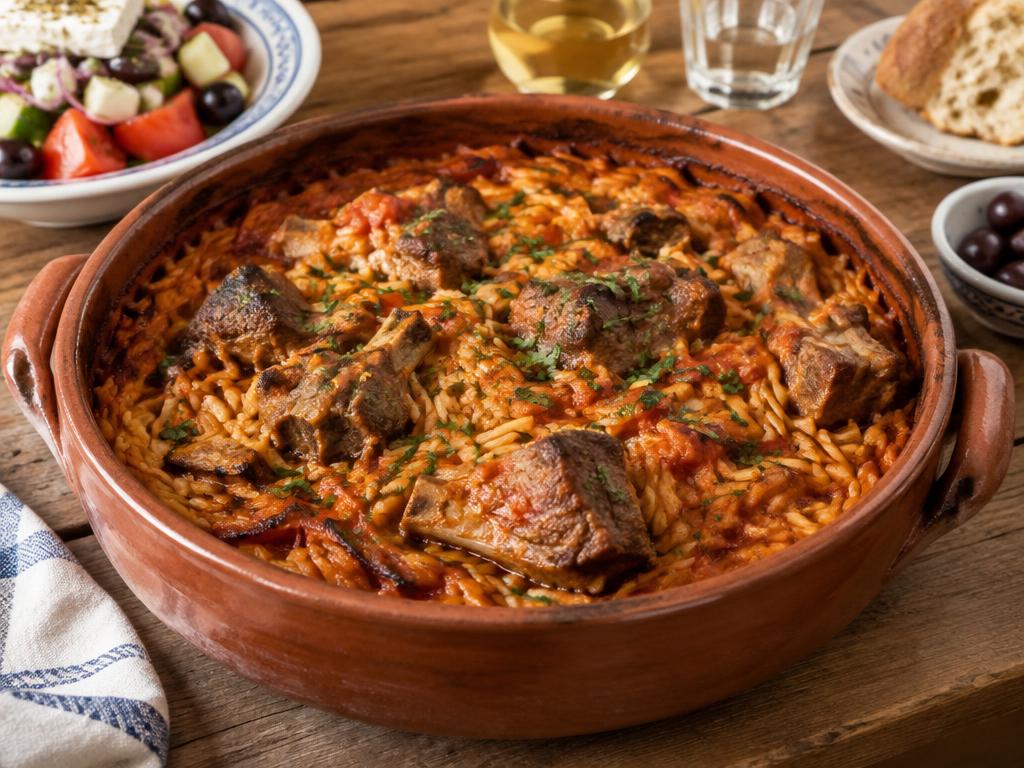
Γιουβέτσι · yoo-VEH-tsee
Tender meat slow-baked with orzo in a rich tomato sauce, served in the clay pot it cooked in. Order it at Ta Petaladika in Old Town — our favorite taverna.
Special shout-out: this is the dish we always point people to first.
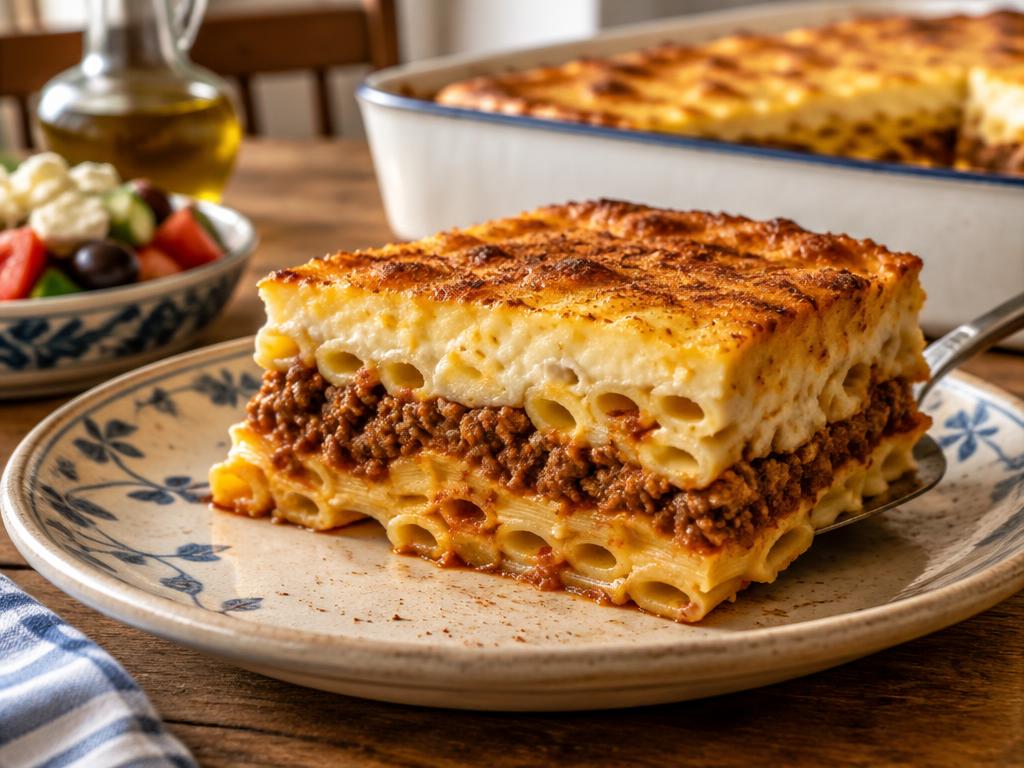
Παστίτσιο · pah-STEE-tsee-oh
Greek baked pasta — layers of tubular pasta, spiced minced beef and thick béchamel. Like moussaka's pasta cousin.
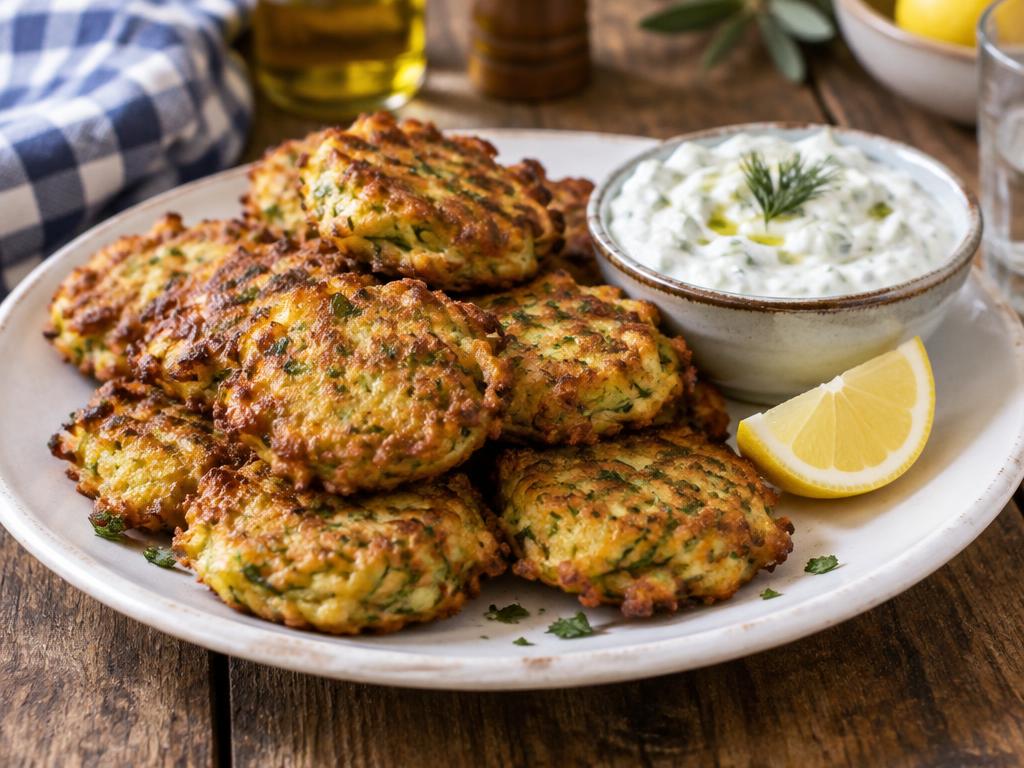
Κολοκυθοκεφτέδες · koh-loh-kee-thoh-kef-TEH-thes
Golden fried zucchini fritters with herbs, usually served with tzatziki. Crispy outside, soft inside.
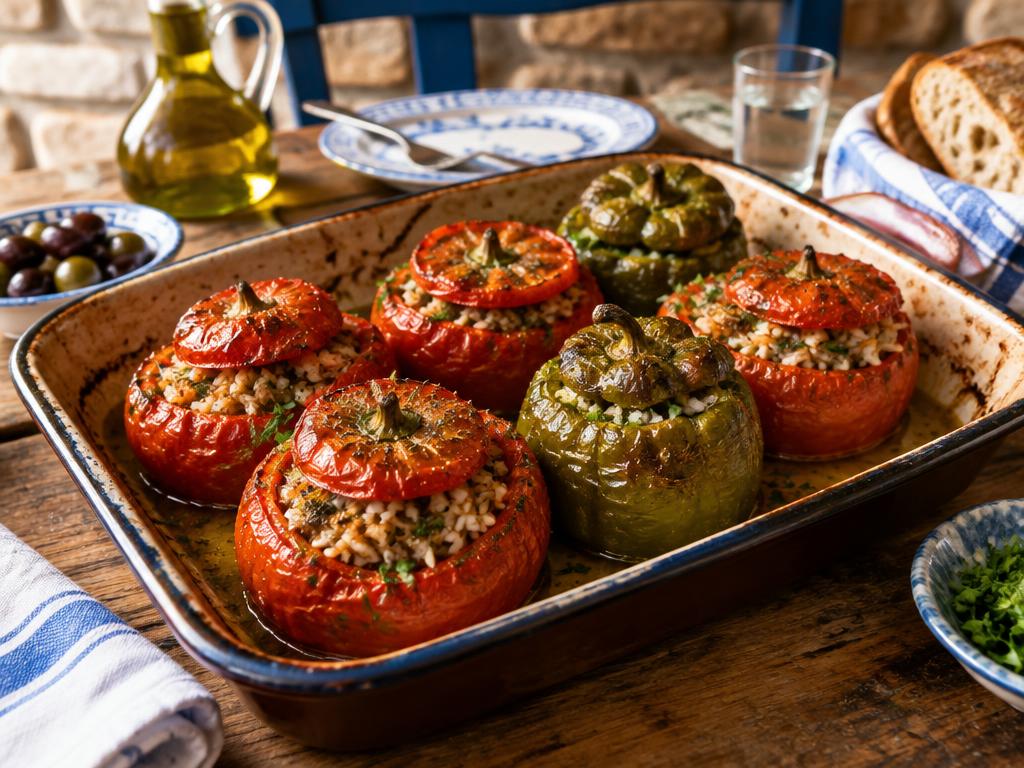
Γεμιστά · yeh-mee-STAH
Tomatoes and peppers stuffed with herbed rice and baked in olive oil. A summer staple at every family taverna.
Χωριάτικη · hoh-ree-AH-tee-kee
The village salad — tomatoes, cucumber, onion, olives and a slab of feta with oregano and olive oil. No lettuce, ever. Put one in the middle of every table.
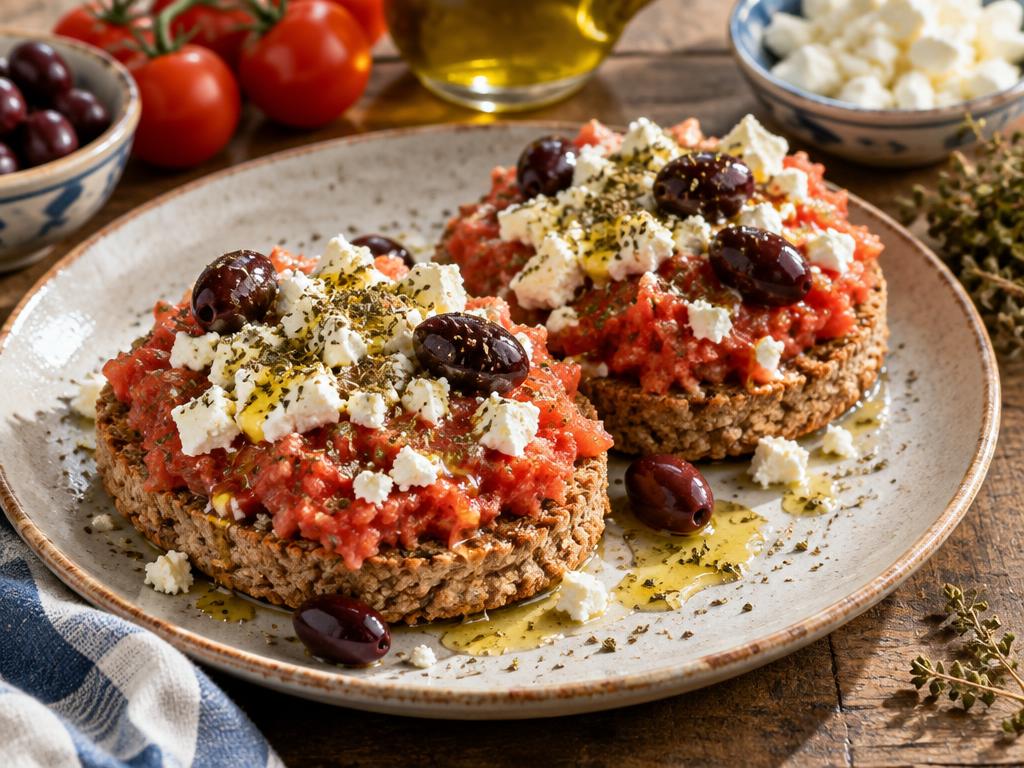
Ντάκος · DAH-kohs
Barley rusks soaked with grated tomato, topped with crumbled feta, olives and olive oil. Crunchy, juicy, addictive.
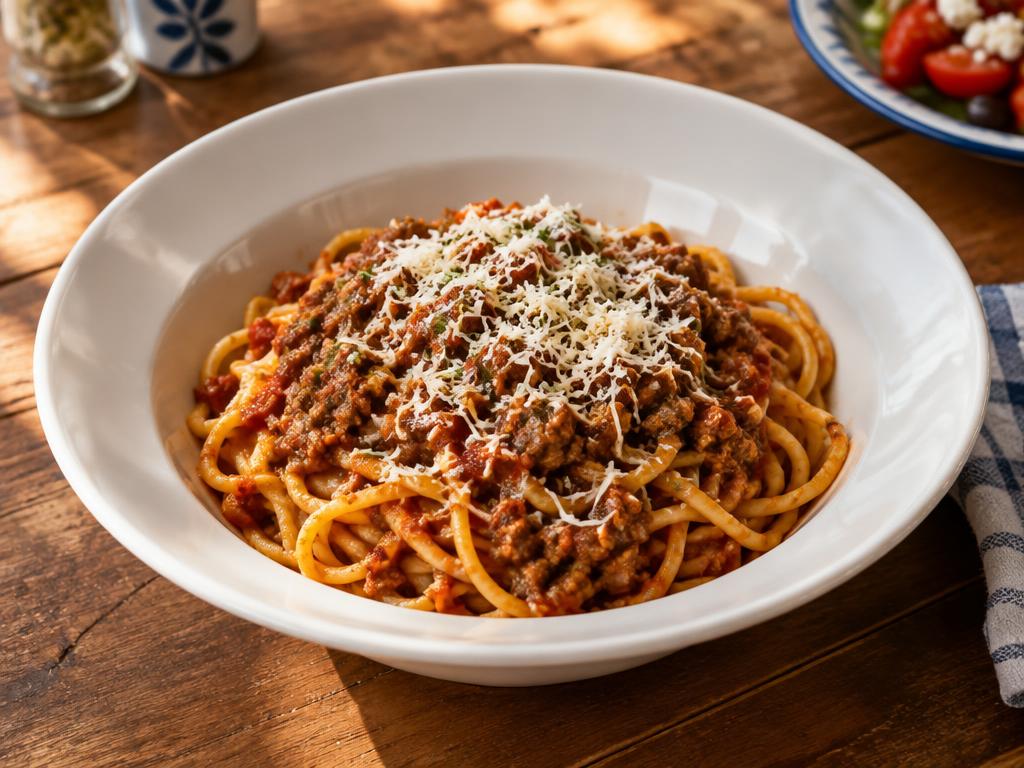
Μακαρόνια με κιμά · mah-kah-ROH-nyah meh kee-MAH
Pasta with slow-cooked minced meat in tomato sauce and grated cheese. Greece's answer to a Sunday ragù.
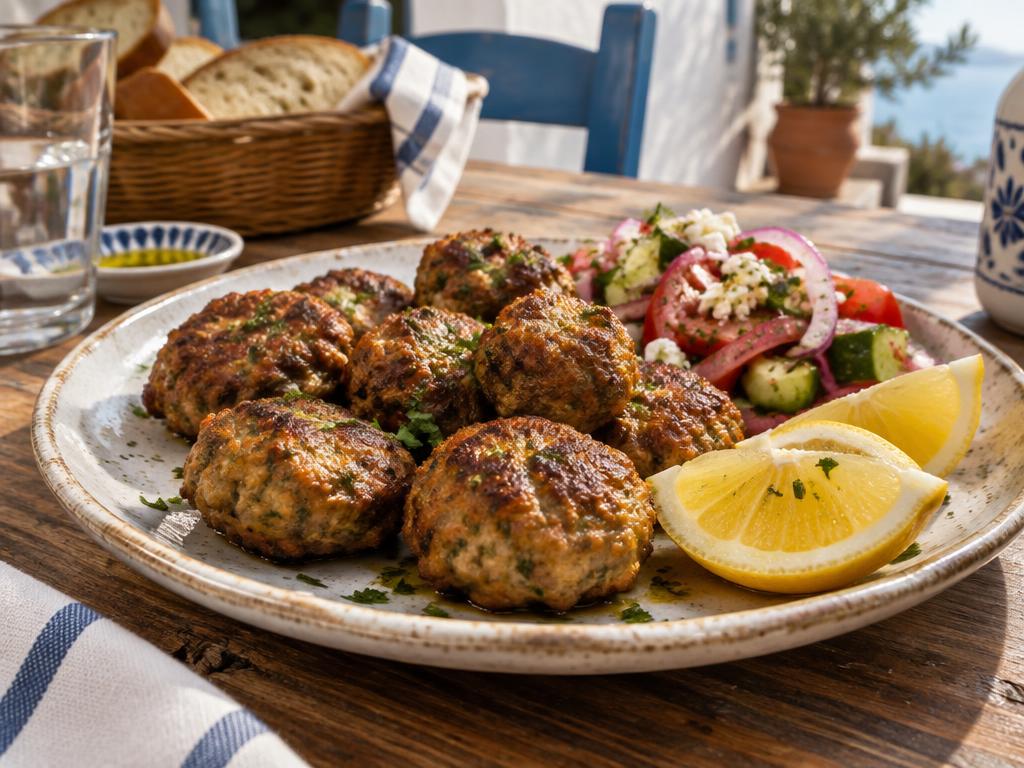
Κεφτέδες · kef-TEH-thes
Fried meatballs with herbs and lemon. Simple, perfect, gone in minutes.
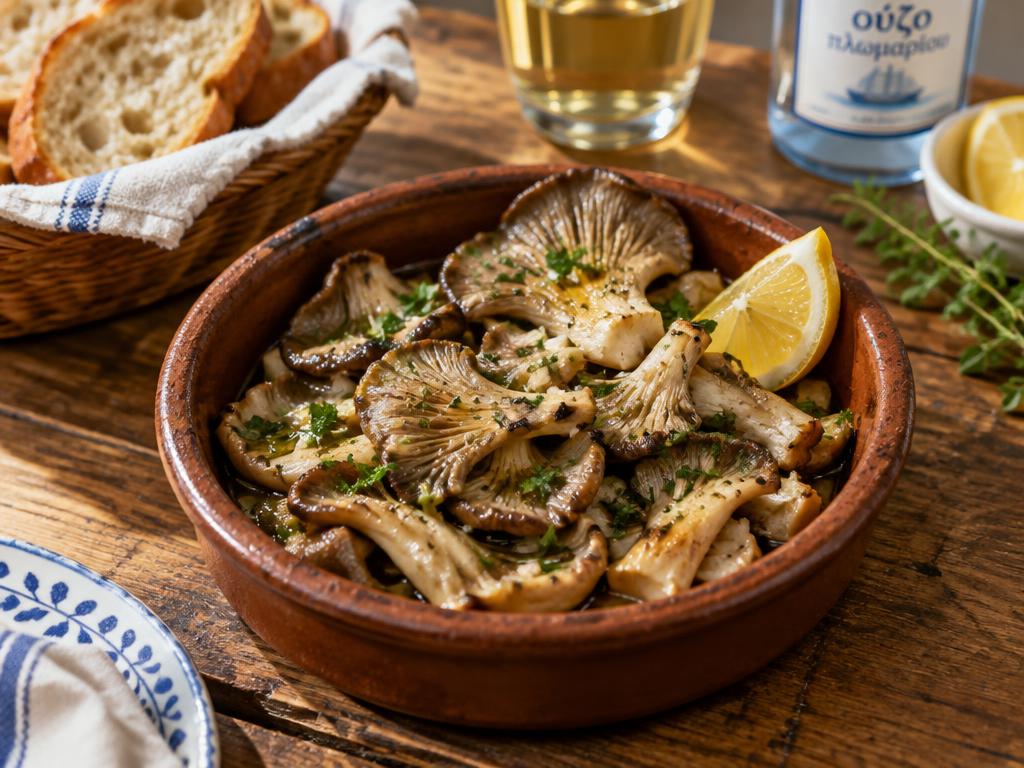
Πλευρωτούς · plev-roo-TOOS
Oyster mushrooms sautéed with garlic, herbs and lemon. Try them at Ta Petaladika — it's the dish we told you about.
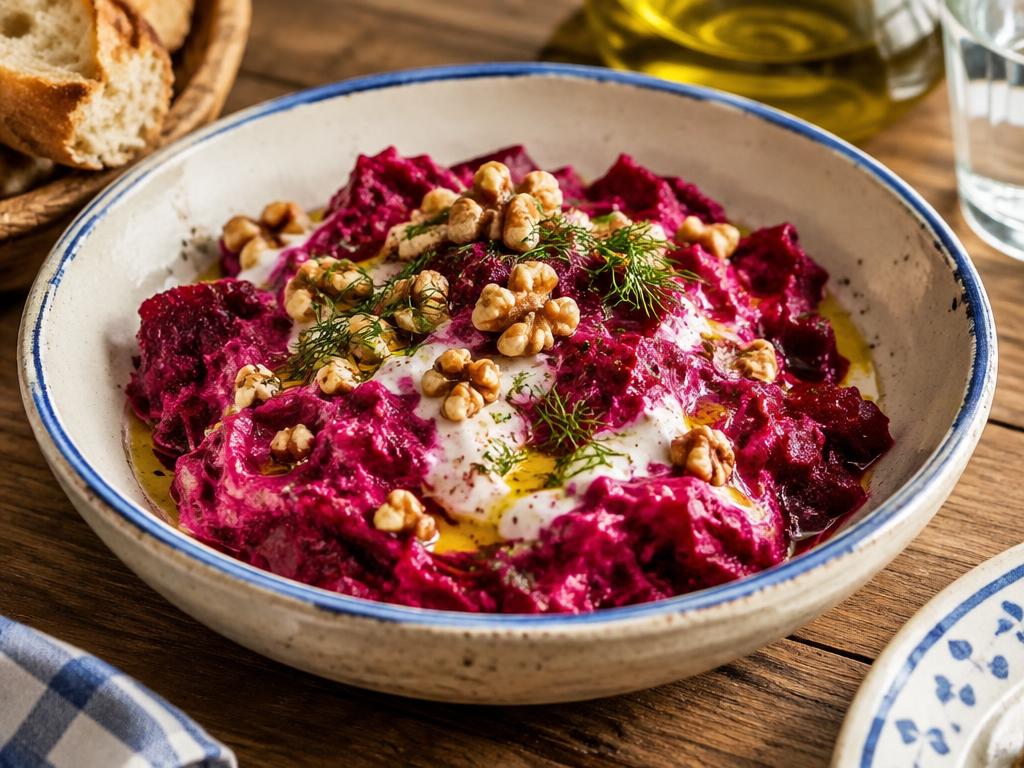
Πατζαροσαλάτα · paht-zah-roh-sah-LAH-tah
Beetroot salad, vivid magenta, often with yogurt and walnuts. Earthy, sweet and beautiful on the table.
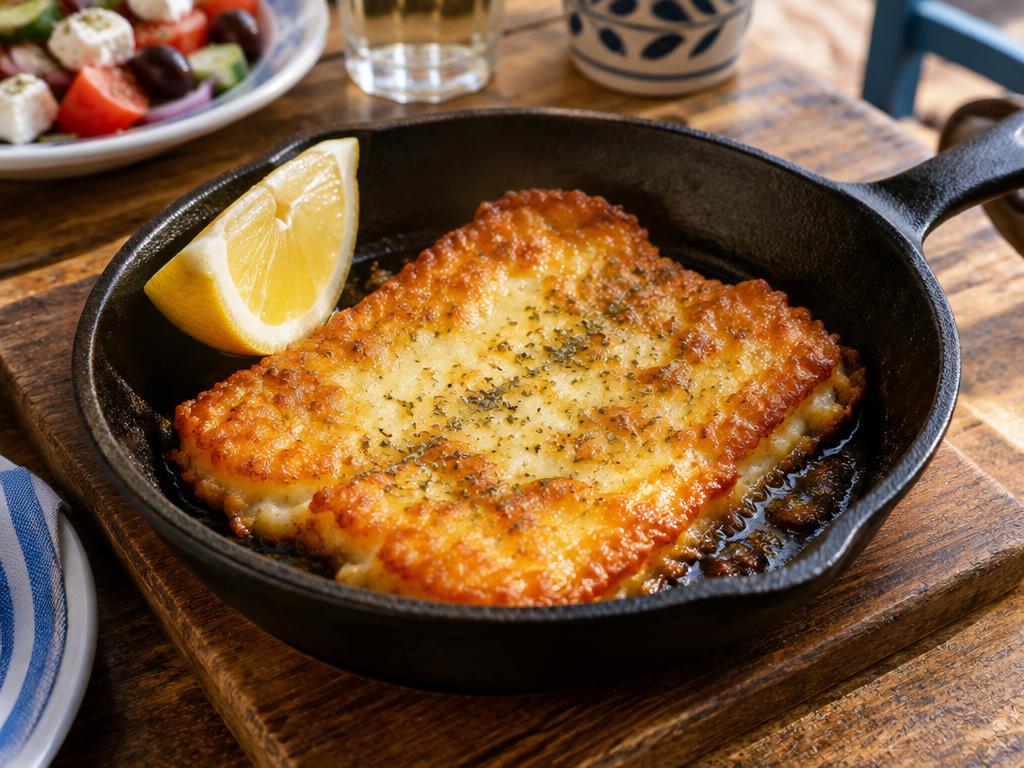
Σαγανάκι · sah-ghah-NAH-kee
A thick slice of cheese pan-fried until golden and crispy at the edges, finished with lemon. Order it the moment you sit down.
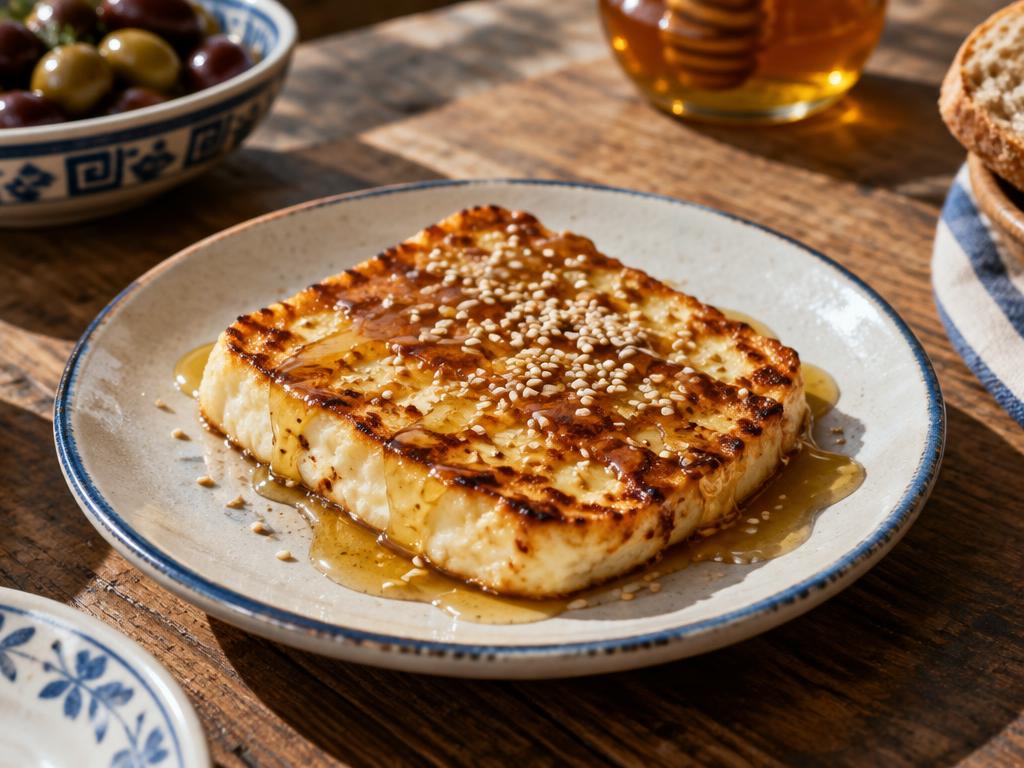
Τυρί ψητό με μέλι · tee-REE psee-TOH meh MEH-lee
Grilled cheese drizzled with honey and sesame. Sweet, salty, melty — the plate everyone fights over.
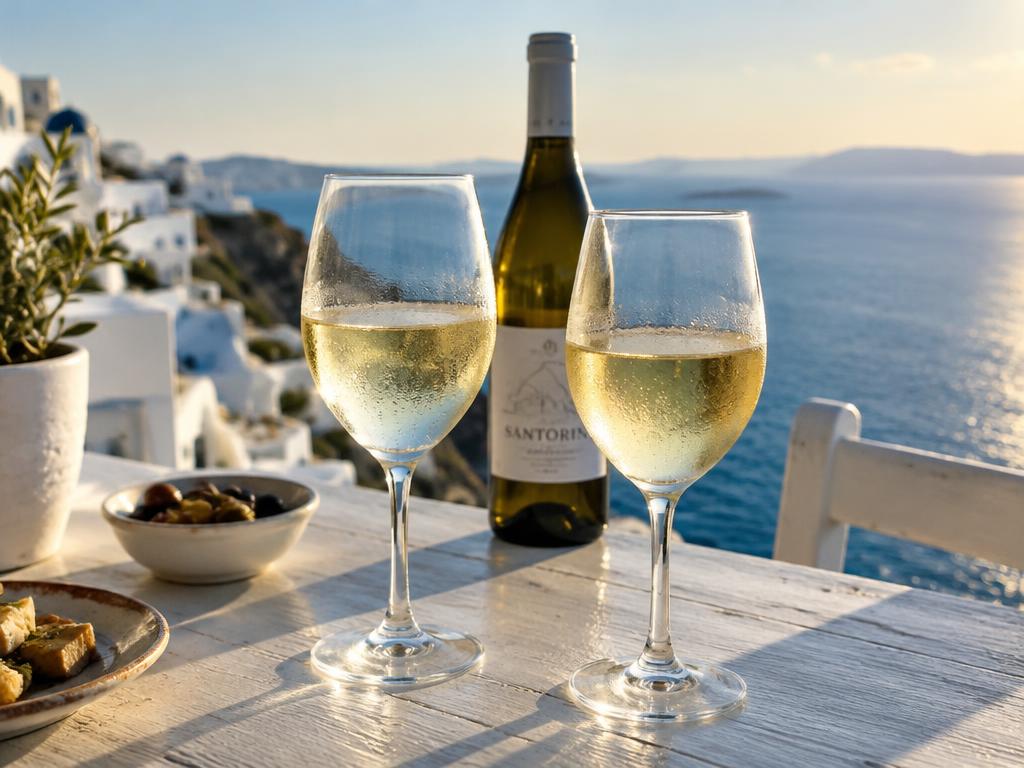
Our honest opinion: everything on this page tastes better with a cold glass of Greek white wine next to it. Ask for the house white ("hima" — χύμα, poured from the barrel) or a bottle of Assyrtiko, and let the afternoon take care of itself.
A carafe of house white, please.
Μια καράφα χύμα λευκό, παρακαλώ.
mee-ah kah-RAH-fah hee-MAH lef-KOH, pah-rah-kah-LOH